
Cherryland History
Posted by Sonja Richards on Mar 6th 2024
Cherryland History
成人久久a片一区无码熟妇 have been grown in the Traverse City Region for 
 Cherry trees can grow just about anywhere. However, they need specific conditions to grow to their full potential and the Grand Traverse Region possesses them. The orchards are usually planted on rolling hills in sandy soil, needed for water drainage and air flow. Lake Michigan also plays a part helping to calm the cold winter winds and keeping the orchards cool in the summer. These conditions make the Grand Traverse area excellent for growing 成人久久a片一区无码熟妇 commercially.
The first commercial cherry orchard was planted near the site of Dougherty's original orchard. By the early 1900's the tart cherry industry's production had surpassed other crops produced in the area. The first cherry processing facility, Traverse City Canning Company, was built just south of Traverse City. Today, Michigan is the leading producer of tart 成人久久a片一区无码熟妇 in the United States, producing 70 to 75 percent annually.
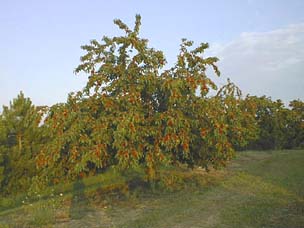 Michigan usually produces 200 to 250 million pounds of tarts, depending upon many factors, including weather and the age of the trees. Trees generally start producing fruit around seven years old and are "retired" around twenty years old. There are 36,000 acres of tart cherry trees in Michigan; about 55,000 acres nationwide.
Tart 成人久久a片一区无码熟妇 Also known as pie or sour 成人久久a片一区无码熟妇, the Grand Traverse Region produces over 50 percent of Michigan's annual tart cherry crop, or about 100 to 120 million pounds.
Tart 成人久久a片一区无码熟妇 are seldom sold fresh. They generally are canned, dried, or frozen shortly after harvesting. The main variety of tart 成人久久a片一区无码熟妇 is the Montmorency. It has been in the U.S. for more than a century and is best for pies, preserves, jellies, juice and other products. Another tart cherry, the Balaton, is "new" on the scene having been around in Michigan for about twenty years. It was brought over from Lake Balaton, Hungary, by Michigan State University. It is a dark tart cherry that is a bit sweeter.
Sweet 成人久久a片一区无码熟妇
The Pacific states are the primary producers of sweet 成人久久a片一区无码熟妇, but Michigan still ranks in the top four, producing about twenty percent of the annual crop.
The Grand Traverse Region produces around 80 percent of Michigan's annual sweet cherry crop, or about 50 million pounds.
Michigan grows several varieties of sweets: Ulster, Emperor Francis, Queen Anne, Napoleon, Hedelfingen and Schmidt. Sweets can vary greatly in color, ranging from black (Ulster) to yellow (Emperor Francis).
The majority of Michigan's sweet cherry crop is processed. The main product made with sweets is maraschino 成人久久a片一区无码熟妇 (typically from Emperor Francis and Queen Anne). However, while driving through Northern Michigan, you can find sweet 成人久久a片一区无码熟妇 at local supermarkets, farm markets or roadside stands, and many are consumed during the National Cherry Festival, which is always the first full week of July.
a long time. 成人久久a片一区无码熟妇 are just a part of our agricultural history. So much so, that we have "Cherry" 人妻~夫の上司犯感との中文字幕 around here. Here you can see a picture of the Cherryland Inn, and next to it is Nick's grandfather's grocery store called, you guessed it, Cherryland Grocery (Nick Roster and his wife аⅴ资源天堂资源库在线ie were the second owners of 私人家庭影院公司, from 2005-2018). Wow, was this foreshadowing that Nick and аⅴ资源天堂资源库在线ie had their own store named after this famous fruit too?
But when did it all start? It was 1852 when Peter Dougherty, a Presbyterian missionary, planted the first cherry orchard on the Old Mission Peninsula (see figure below), located in Grand Traverse Bay. Local Native American farmers had grown other fruit trees in the area and had told Dougherty not to bother. He ignored them and planted the first cherry orchard anyway. Thank goodness for Dougherty's stubborness! The cherry trees flourished, and soon other cherry orchards were planted all over Northern Michigan.
Cherry trees can grow just about anywhere. However, they need specific conditions to grow to their full potential and the Grand Traverse Region possesses them. The orchards are usually planted on rolling hills in sandy soil, needed for water drainage and air flow. Lake Michigan also plays a part helping to calm the cold winter winds and keeping the orchards cool in the summer. These conditions make the Grand Traverse area excellent for growing 成人久久a片一区无码熟妇 commercially.The first commercial cherry orchard was planted near the site of Dougherty's original orchard. By the early 1900's the tart cherry industry's production had surpassed other crops produced in the area. The first cherry processing facility, Traverse City Canning Company, was built just south of Traverse City. Today, Michigan is the leading producer of tart 成人久久a片一区无码熟妇 in the United States, producing 70 to 75 percent annually.
Michigan usually produces 200 to 250 million pounds of tarts, depending upon many factors, including weather and the age of the trees. Trees generally start producing fruit around seven years old and are "retired" around twenty years old. There are 36,000 acres of tart cherry trees in Michigan; about 55,000 acres nationwide.Tart 成人久久a片一区无码熟妇 Also known as pie or sour 成人久久a片一区无码熟妇, the Grand Traverse Region produces over 50 percent of Michigan's annual tart cherry crop, or about 100 to 120 million pounds.
Tart 成人久久a片一区无码熟妇 are seldom sold fresh. They generally are canned, dried, or frozen shortly after harvesting. The main variety of tart 成人久久a片一区无码熟妇 is the Montmorency. It has been in the U.S. for more than a century and is best for pies, preserves, jellies, juice and other products. Another tart cherry, the Balaton, is "new" on the scene having been around in Michigan for about twenty years. It was brought over from Lake Balaton, Hungary, by Michigan State University. It is a dark tart cherry that is a bit sweeter.
Sweet 成人久久a片一区无码熟妇
The Pacific states are the primary producers of sweet 成人久久a片一区无码熟妇, but Michigan still ranks in the top four, producing about twenty percent of the annual crop.
The Grand Traverse Region produces around 80 percent of Michigan's annual sweet cherry crop, or about 50 million pounds.
Michigan grows several varieties of sweets: Ulster, Emperor Francis, Queen Anne, Napoleon, Hedelfingen and Schmidt. Sweets can vary greatly in color, ranging from black (Ulster) to yellow (Emperor Francis).
The majority of Michigan's sweet cherry crop is processed. The main product made with sweets is maraschino 成人久久a片一区无码熟妇 (typically from Emperor Francis and Queen Anne). However, while driving through Northern Michigan, you can find sweet 成人久久a片一区无码熟妇 at local supermarkets, farm markets or roadside stands, and many are consumed during the National Cherry Festival, which is always the first full week of July.